
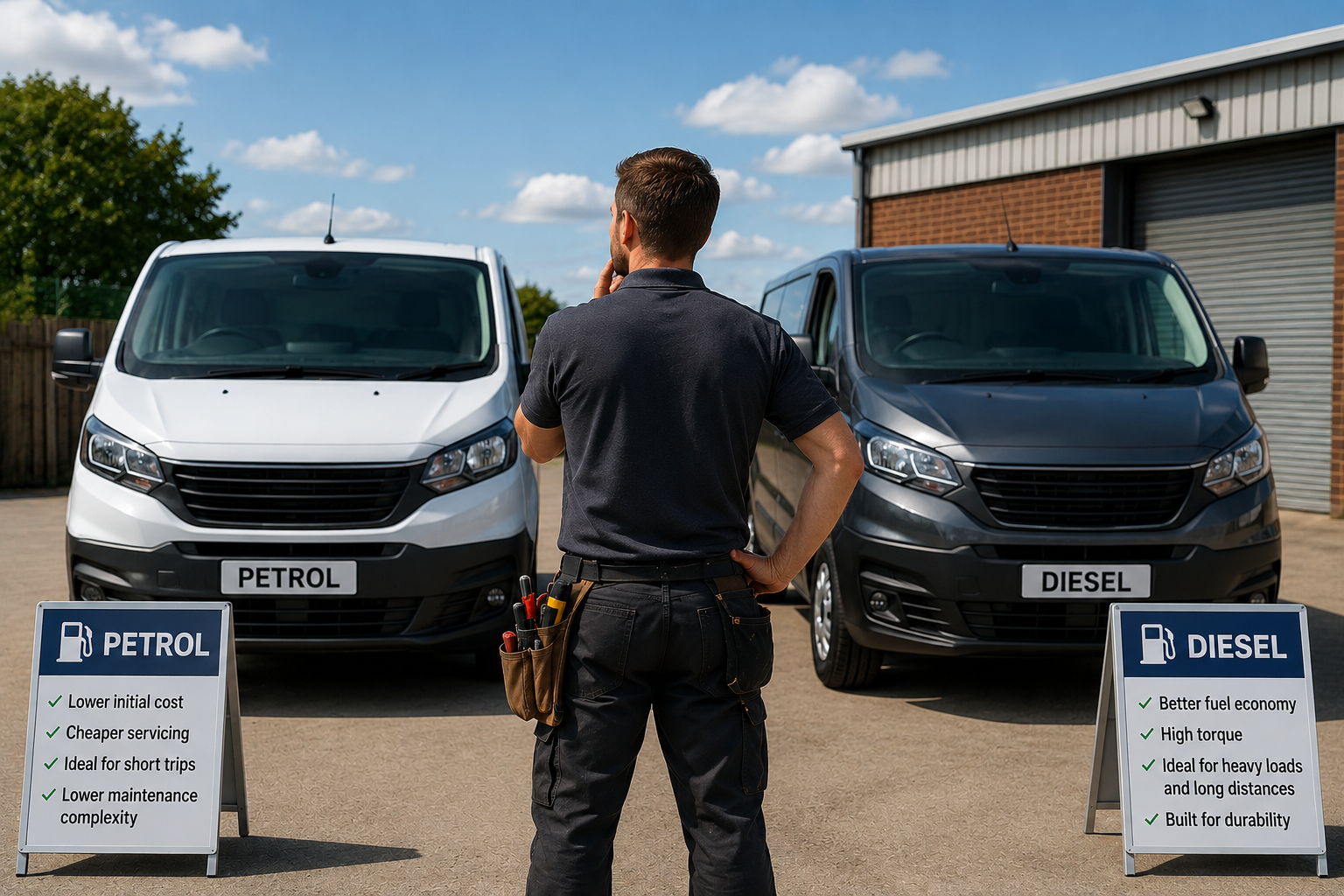
Choosing a new van can be a challenging decision. This is mainly because there are so many factors at play. From the price to the colour and everything in between, something that you may not have thought about is what it should run on. Usually, when it comes to commercial vans, you’ll choose between petrol- and diesel-powered vehicles, and van maintenance in this regard can differ depending on the one you choose.
Even in this day and age, where electric vans are beginning to take hold, they don’t yet have the mileage required that a lot of tradespeople need to cover during a typical working day. With this in mind, the decision often comes down to whether to have a petrol- or a diesel-powered van, and it’s usually one of the first decisions you have to make about your new vehicle.
In this article, we’ll go through the maintenance differences between petrol- and diesel-powered vans. This is so you’re armed with the right information to make a more informed decision. So, what are the maintenance differences between petrol and diesel vans? Let’s find out.
Engine maintenance
Regardless of whether or not you choose a petrol or diesel van, it will require servicing. This is something we can do here at VanServ. Our team of technicians are highly experienced in the field. We’ll subsequently deliver exceptional van servicing services for a wide range of makes and models.
Depending on the tier of van service you choose, it will often include oil changes, filter replacements and inspections of key parts and components, like spark plugs and brakes. However, focusing primarily on diesel-powered vans, they generally operate under higher compression. As such, they’ll use more complex fuel and emissions systems.
In addition, diesel engines also require specialist components. This can include high-pressure fuel pumps and injectors. While they’re designed to withstand demanding operating conditions, they can be expensive to replace should they fail. This is usually why van owners will schedule a van service – it allows us to identify problems before they become major.
Oil & filter changes
Regular oil changes are essential for both petrol and diesel vans. Diesel vans can put greater demand on engine oil. This is especially the case if the vehicle is used primarily to carry heavy loads or is required to travel long distances regularly. Diesel vans commonly use diesel particulate filters (DPFs). This makes the correct specification of engine oil especially important. It’s also why owners should always read the manual.
Better yet, book your diesel van in for a service. It’s a convenient service where a professional in the field can do it all for you. So you can’t go wrong. Petrol vans, on the other hand, require the replacement of air and oil filters. While this is the same for diesel vans as well, oil and filter changes in petrol vans are somewhat more straightforward. This is because diesel fuel filters require special attention. This is because contaminated fuel or water in the fuel system can cause costly issues.
Diesel particulate filters
One of the biggest maintenance differences between petrol and diesel vans is that diesel vans come with something called a diesel particulate filter (DPF). We’ve briefly touched on it already in this article. A DPF is used to capture soot that comes from the exhaust, periodically burning it off via a process called regeneration.
This system works particularly well when a van is required to go on long journeys at a reasonable speed regularly throughout its lifespan. If the van is used for short trips or start-stop driving in big cities, for instance, then it can be prone to DPF problems.
Usually, the culprit is the exhaust failing to reach the temperature needed for effective regeneration. If the DPF is blocked or damaged, then it can result in reduced performance and expensive repairs, potentially.
On the other hand, petrol vans don’t have the same needs or concerns. However, some modern petrol vehicles will use petrol particulate filters and other emissions-control systems. If it concerns you, then ask about it before committing to a new petrol or diesel van.
Timing belts & chains
Both diesel and petrol engines will have either a timing belt or a timing chain. The one used will depend on the vehicle and the engine design. Timing belts will need to be replaced based on mileage or age. Replacing one as part of scheduled maintenance can be expensive.
However, ignoring the replacement of a timing belt can do untold and irreversible damage to the engine. It can often write off a vehicle should it fail and snap. Timing chains, on the other hand, are often designed to last a lot longer. However, they’re still not maintenance-free.
General wear, poor lubrication or issues with the tensioners can cause chain-related faults to occur. The important thing to remember here is that the timing equipment varies engine-to-engine. As such, van buyers should check the manufacturer’s service schedule as opposed to assuming that diesel or petrol vans automatically mean one particular system.
Spark plugs vs. glow plugs
Petrol engines use spark plugs to ignite the air-fuel mixture. Spark plugs are relatively inexpensive service items and will need to be replaced at specific intervals outlined by the van manufacturer. Diesel engines will use glow plugs to assist with starting the engine when it’s cold.
They don’t, however, perform the same role as spark plugs in a petrol van. Glow plugs can eventually fail, potentially causing difficult starting ot warning lights, especially when the winter hits. While neither component is a major expense to replace or maintain, diesel fuel and the starting system can be more complex overall.
Clutches & dual-mass flywheels
The clutch is another area where maintenance costs can differ between petrol and diesel vans. Many diesel vans will produce a considerable amount of torque at low engine speeds. Depending on the vehicle, it can be combined with a dual-mass flywheel (DMF) to reduce vibrations and protect the drivetrain in the process.
A worn clutch or failing DMF can be costly to fix, mainly because of the labour involved and the overall price of the components. Petrol vans also have dual-mass flywheels and clutch wear. As such, this isn’t an issue reserved exclusively for diesel vans.
Driving style can also play a role in the lifespan of a clutch. Frequent stop-start traffic, towing and carrying heavy loads can also increase wear over time, regardless of whether it’s petrol or diesel-powered. Essentially, you shouldn’t let the clutch be the difference between choosing a petrol or diesel vehicle.
Fuel system maintenance
Diesel fuel systems operate at high pressures in modern common-rail engines. Injectors and high-pressure fuel pumps therefore need to be kept in excellent condition. Poor quality or contaminated fuel has the ability to cause serious damage. Replacing diesel injectors or a high-pressure pump can be considerably more expensive when compared to routine petrol fuel-system repairs. Petrol engines use different fuel-injection systems, and although modern petrol engines can develop injector, pump or sensor faults, their fuel systems are generally far less demanding than modern high-pressure diesel systems.
Emissions systems
Modern vans,s whether petrol or diesel powered, are subject to increasingly strict emissions requirements. Diesel vans can, therefore, have several additional components that require ongoing maintenance, such as DPFs, exhaust gas recirculation (EGR) and selective catalytic reduction (SCR) systems using AdBlue, on many newer vehicles. These systems help to reduce emissions and add complexity simultaneously.
EGR valves can become contaminated, while DPF and AdBlue-related faults can require specialist diagnosis. Petrol vans also have emissions-control equipment, such as catalytic converters, oxygen sensors and other electronic systems. However, they generally avoid some of the diesel-specific components and issues associated with soot and NOx reduction, for instance.
VanServ know how important your vehicle is to your livelihood. That’s why we’re pleased to offer a wide range of services, including van servicing, van gearbox repairs and replacements, van clutch repairs and replacements, key cutting and programming, van remapping and more. If you’d like further information about how we can keep your van in top condition, no matter how heavy the load is, get in touch with a member of our friendly, knowledgeable team today – we’re always happy to hear from you.