
Renault Trafic Antipollution Light Diagnosis
Renault Trafic Antipollution Light Diagnosis
Diagnosis & Fault-Finding for Antipollution Warnings on Renault Trafic Vans
We offer targeted diagnostic services to identify the root cause of antipollution faults on Renault Trafic vans and help you avoid unnecessary part swapping or guesswork.
What is the Antipollution Warning?
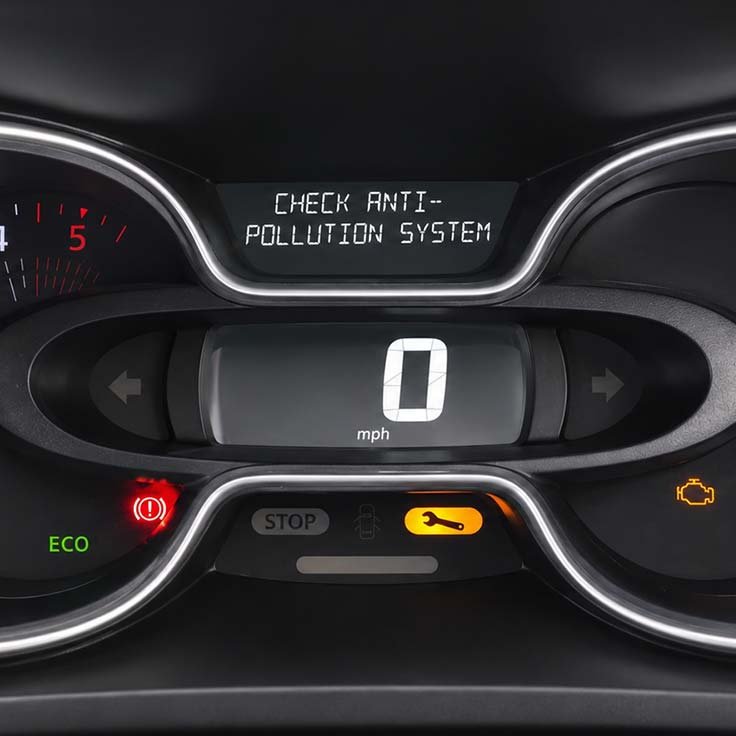
When the system detects a fault, it triggers the antipollution warning or engine management light. This can affect performance, fuel economy, and in some cases, cause the van to enter limp mode.
Common Causes in Renault Trafic Vans
Some of the most frequent causes of the antipollution light on a Renault Trafic include:
- EGR valve blockage or failure – especially common on high-mileage models
- DPF (Diesel Particulate Filter) issues – such as partial blockage or failed regeneration
- Faulty O2 or NOx sensors – sending incorrect readings to the ECU
- Injector issues or air/fuel imbalance – triggering emissions-related errors
- Software faults – requiring ECU updates or reprogramming
- Poor-quality fuel – occasionally causes false positives on sensitive sensors
We use Renault-compatible diagnostic tools to read live data, fault codes, and sensor behaviour, allowing us to quickly pinpoint the issue.
What Our Diagnosis Includes
- Full scan of the ECU and emission-related modules
- Fault code reading and interpretation
- Advice on the most cost-effective repair route
- Warning light reset after repairs (where appropriate)
Suitable for:
- Renault Trafic II (2001–2014) – common for EGR and sensor faults
- Renault Trafic III (2014 onwards) – frequently affected by DPF and NOx sensor issues
- Manual and automatic models
- 1.6 and 2.0 diesel variants
If your Renault Trafic is showing an antipollution system warning, don’t ignore it – continued driving may lead to limp mode or further damage. Book a professional diagnostic session to identify the cause and get it sorted properly.